Why Your Battery Backup Needs Type A RCDs – A Compliance Update for 2026
When we install a home battery with backup, safety and compliance are non-negotiable. Recent updates to Australian Standards mean we’ve changed how we protect your “essential” backup circuits. Here’s what that means for your home, in plain English. Adding a battery counts as an “alteration”
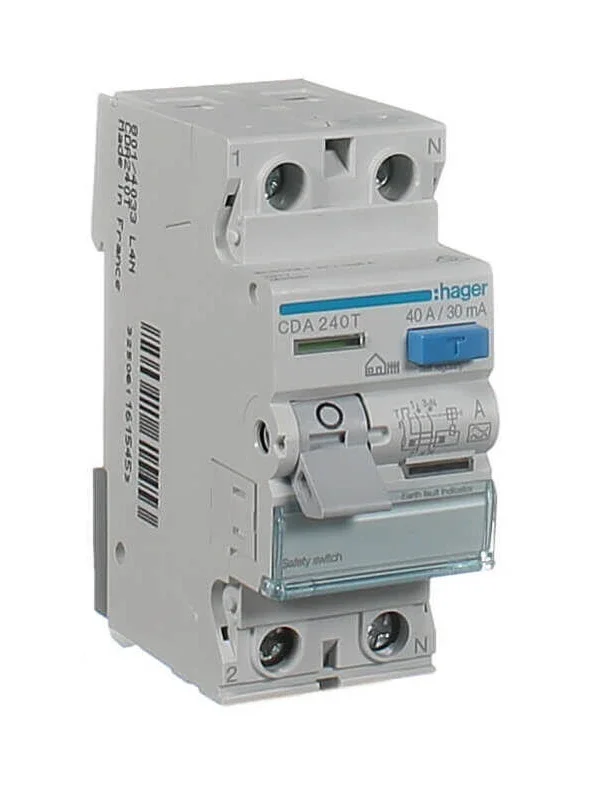
Hager CDA240T Residual Current Circuit Breaker
Under AS/NZS 4777.1:2024 Clause 5.3.6.4, connecting an alternative supply like a battery is officially an alteration to your electrical installation. AS/NZS 3000:2018 Clause 1.4.8 says the same thing: any modification to part of an existing install is an alteration. Why that matters: altered circuits must meet today’s rules
AS/NZS 3000:2018 Clause 1.9.3 requires that when we alter part of an installation, all affected parts must be upgraded to current standards. So every power or light circuit we move onto battery backup has to be brought up to 2024/2026 code – no grandfathering.Type AC RCDs are out. Type A RCDs are in.
Since 1 May 2023, AS/NZS 3000:2018 Clause 2.6.2.2.2 bans Type AC RCDs for new or altered work. Battery inverters can put small DC currents onto the AC wiring during normal operation or faults. Type AC RCDs can be blinded by that and fail to trip. Type A RCDs are designed to handle pulsating DC and still protect you. That’s why every essential circuit we back up now gets a Type A RCD.Every backup circuit gets 30mA protection at the origin
AS/NZS 3000:2018 Clause 2.6.3.2.2 requires 30mA RCD protection at the origin of all final sub-circuits supplied by an alternative supply. Even if that bedroom circuit didn’t have RCD protection before, it does now. It’s about making sure your family is protected whether you’re on grid or on battery.We size everything for the battery, not just the grid
AS/NZS 4777.1:2024 requires that protective devices and cabling suit the characteristics of the new alternative supply. Battery fault currents and switching behaviour are different to the grid. We select breakers, RCDs, and cable sizes so they’ll work correctly in both modes.What this means for you as a homeowner Safer backup – Your essential circuits have the right protection for modern inverters. Future-proof – If your insurer or an inspector asks, your switchboard already meets the latest code. Transparent quotes – Our proposals include these RCD upgrades upfront. No surprises when the electrician turns up.At Coast Wide Energy, we’re licensed electricians and SAA Accredited designers. We don’t just bolt batteries to walls – we make sure the whole system is compliant, safe, and ready for whatever the grid throws at it.Thinking about battery backup? Ask us how we’d design it to meet the 2026 standards.
Call Anthony on 0415 292 097 or email anthony@coastwideenergy.comCoast Wide Energy – Your energy solution specialists
Licensed Electrician | SAA Accredited | NECA Member | Tesla Powerwall & Sigenergy Certified Installer
I Content & Publishing Disclaimer
This article was drafted with the assistance of AI tools and reviewed by Coast Wide Energy for accuracy. Information is current as at the date of publication: 18 April 2026. Electrical standards, rebate amounts, and product specifications can change. This content is general in nature and not a substitute for site-specific advice from a licensed electrician. Always confirm details with your installer and relevant authorities before making decisions.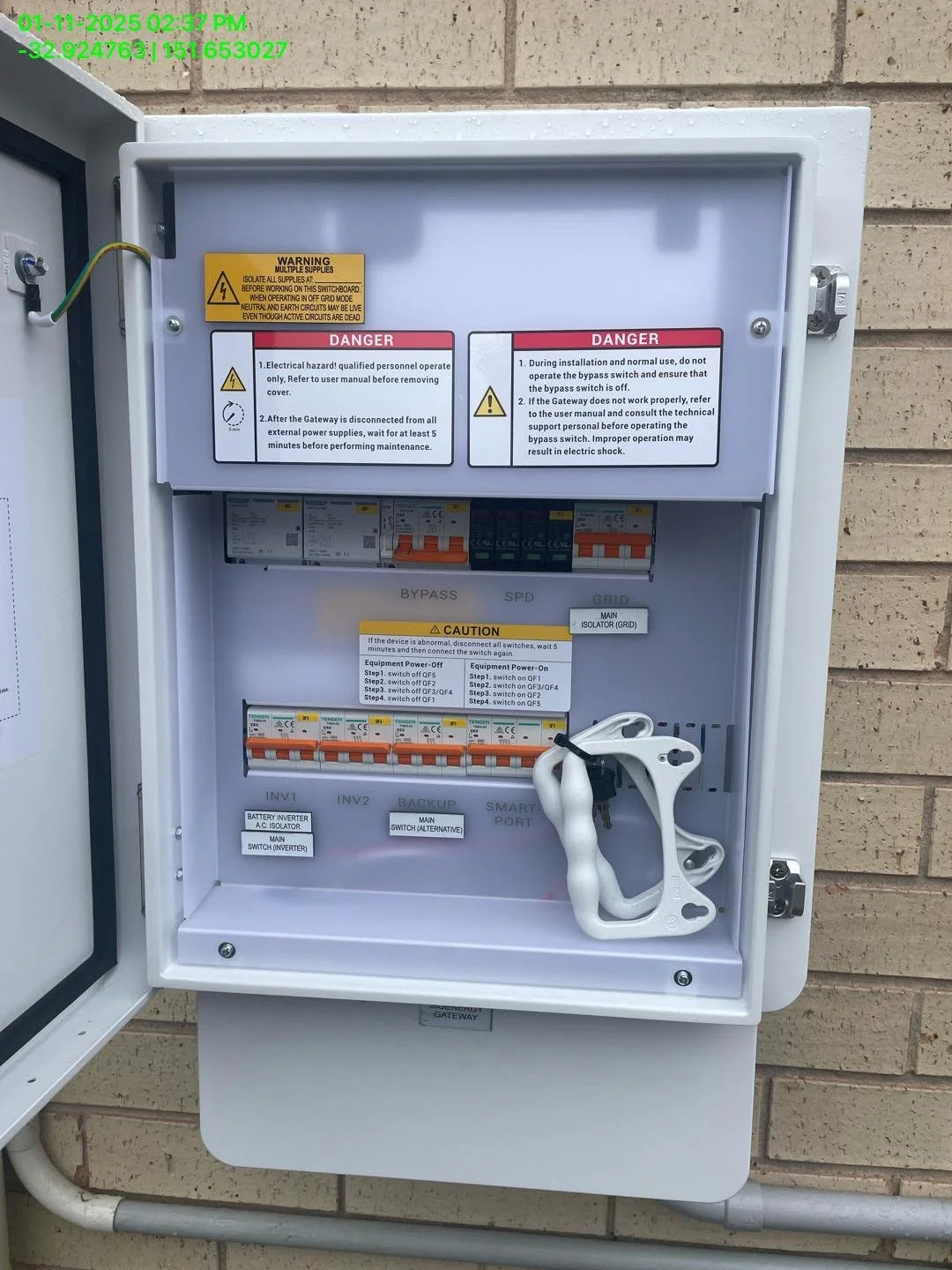
The Sigenergy Gateway, often called a backup box, is a core component of the SigenStor energy system that provides automatic, seamless backup power during grid outages; acting as the system’s “brain,” it intelligently manages energy flow between solar panels, batteries, the grid and household loads to prioritise critical circuits, optimise battery charging and discharging, and ensure continuous power without manual intervention. Designed for reliability and fast response, the Gateway monitors real‑time conditions, executes smooth transitions to backup mode, coordinates inverter and battery operation, and communicates system status to homeowners and installers for effective oversight and maintenance.